

Feeling First: Listen to Your Body Before You Think Your Way Out
Start with sensation, then add interpretation—your body’s signals are the simplest path to clarity and correction.
Sometimes the wisest move is the simplest one: notice what your body is saying before you try to reason or reframe. Tight chest, clenched jaw, shallow breaths, a knot in the stomach—these aren’t nuisances to power through; they’re messages. When we skip straight to logic or get swept by emotion without checking in with sensation, we miss the clearest signal that something is off and needs attention.
Reordering attention changes outcomes. Begin with sensation—what is undeniable in the present moment—then layer in interpretation. This order grounds your mind and steadies your emotions. The body doesn’t argue; it alerts. It doesn’t justify; it informs. From this firmer footing, you can choose a response that actually fits: a pause, a boundary, a glass of water, a walk, a conversation, or simply three slow breaths.
Practice makes this natural. Take brief, regular scans from head to toe. Name what you notice in plain language—warmth in the chest, tight throat, heavy eyes, buzzing hands—without rushing to fix it. Paradoxically, acknowledgement often softens discomfort. Over time, you’ll recognize early patterns: short breath before saying yes when you mean no, a hollow belly when work drifts from your values, a dull headache when rest is overdue. Early, small corrections prevent bigger repairs.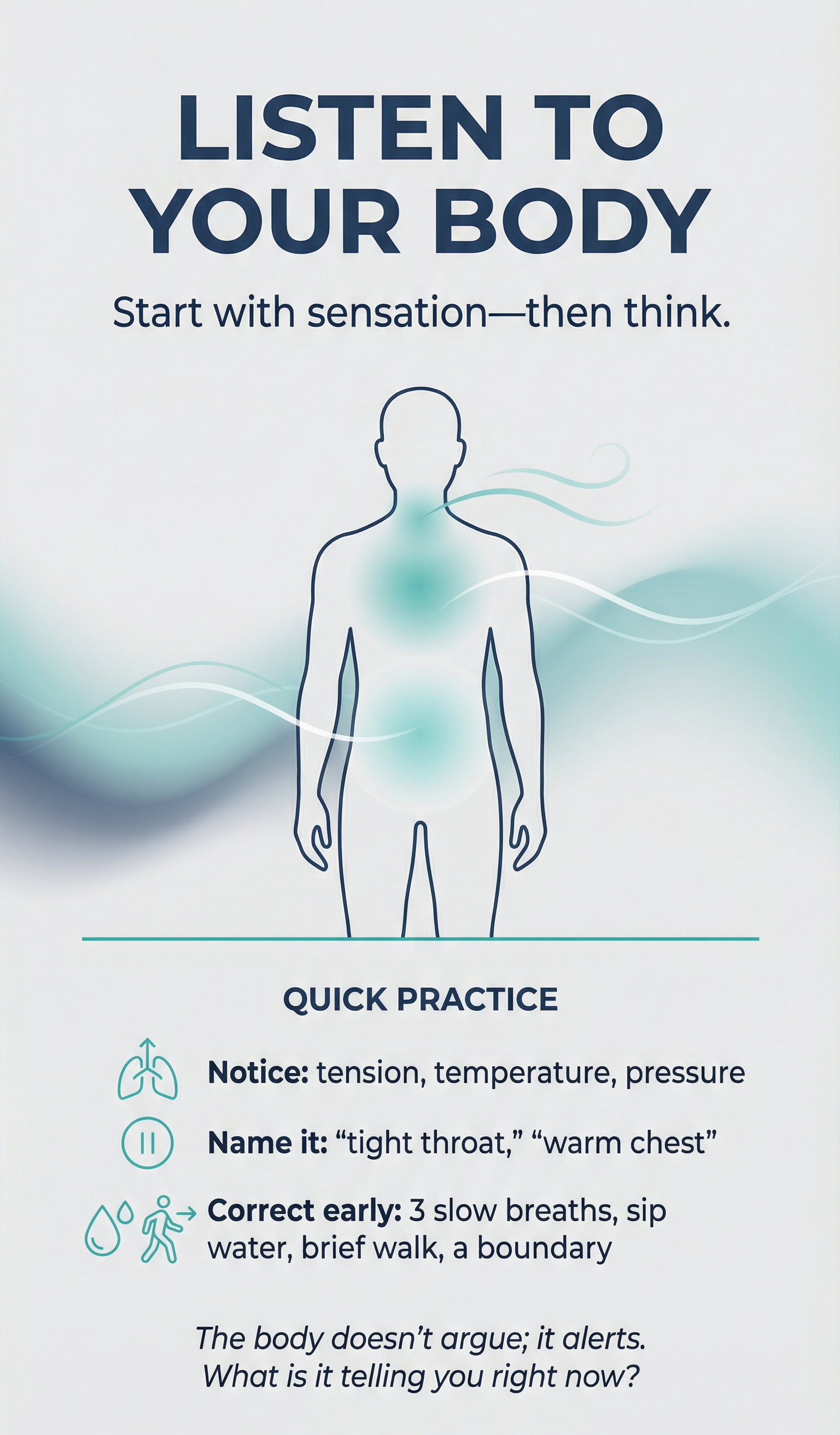

You won’t always know what a sensation means right away—and that’s okay. Curiosity beats certainty. Ask, “What are you telling me?” and let clarity arrive. Many “problems” reveal themselves as simple needs: rest instead of laziness, overstimulation instead of antisocialness, hunger instead of irritability.
Listening to your body is an act of respect that builds self-trust. It shifts how you set boundaries, pace your days, and relate to others. If you’ve learned to override your signals to keep going, be gentle as you unlearn. Numbing and pushing were survival tools; thank them and retire them.
How you feel is enough to tell you when something is wrong—not as a verdict, but as a trustworthy signal. Hear it. Heed it. Then let your thoughts and emotions join the conversation, guided by what your body already knows. Correction begins with listening.
Discover more from mindstrengthorg.in
Subscribe to get the latest posts sent to your email.


Do I Have an Anxiety Gene?
How to Rewrite Your Narrative When faced with anxiety, many of us instinctively look to our.
Read More
Your Senses on Vacation: A Journey.
Explore the world with all five senses and unlock a deeper appreciation for different cultures and.
Read More